Journal ·
Sonnenglas Bright Minds: Shia Su
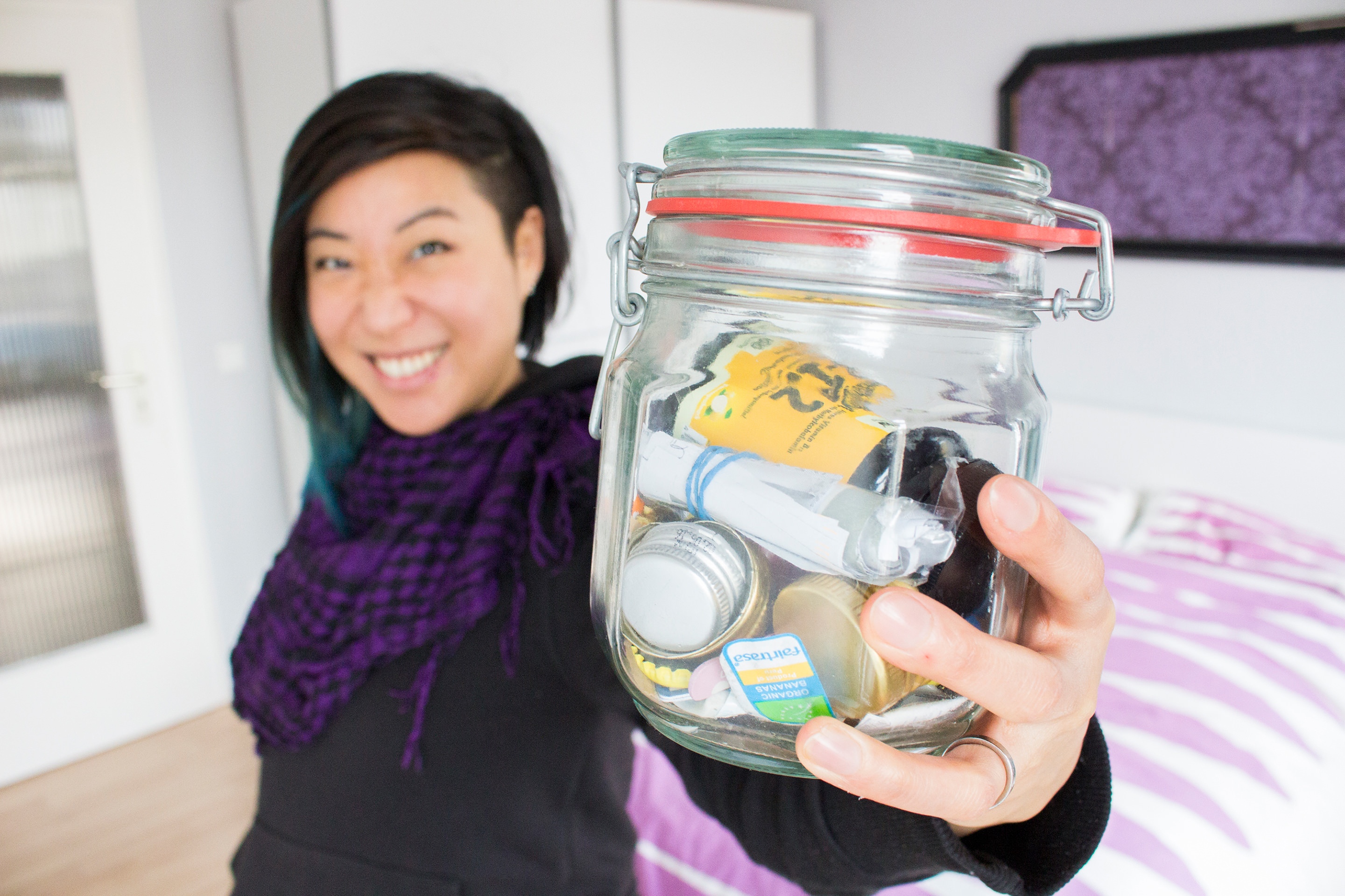
Our \"Bright Minds\" series is all about people who live an extraordinary lifestyle and make the world a better place. Shia Su is just such a person for us. She has been living a zero-waste lifestyle for many years.
Shia Su
Our "Bright Minds" series is all about people who live an extraordinary lifestyle and make the world a better place. Shia Su is just such a person for us. She has been living a zero-waste lifestyle for many years.
Shia Su is perhaps better known to some under the name "Wasteland Rebel". She writes about her life without waste on her blog of the same name. She gives numerous tips on how you can easily replace packaged products and even make them yourself. You can read about how much waste she and her husband produce each year in this article. Shia is also the author of the book "Zero Waste: Less Waste is the New Green". We are impressed and therefore asked Shia for an interview.
Dear Shia, you have been living a zero waste lifestyle for many years - a life without rubbish. How did you get there?
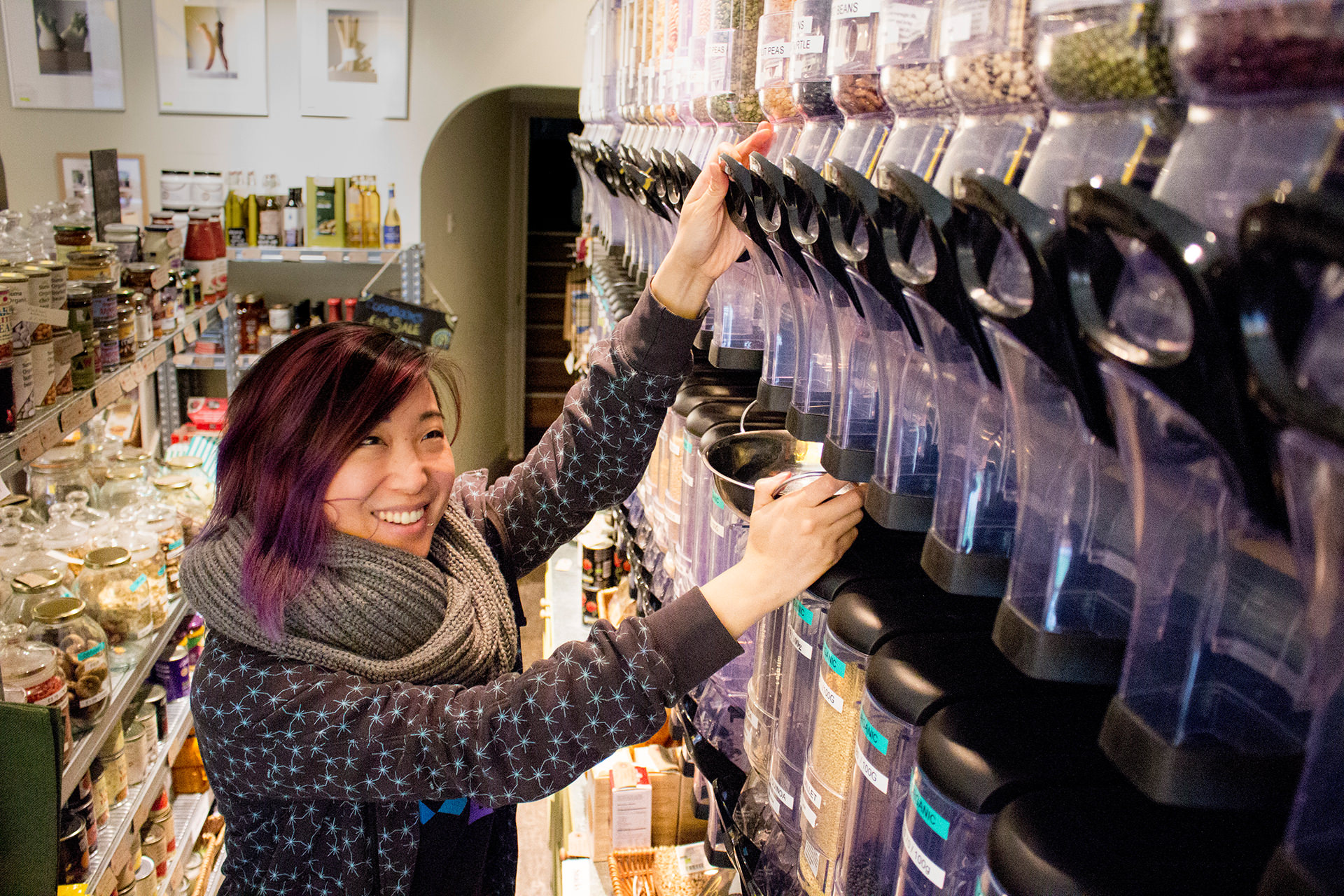
To be honest, that was more of an oversight! My husband Hanno and I never really wanted to live "zero waste"! At the time, we even dismissed zero waste as unrealistic for us - after all, we didn't and unfortunately still don't have an unpackaged shop. Nevertheless, we wanted to avoid our waste a little more consistently within our means. And we were amazed at how much was possible even without an unpackaged shop and that many new possibilities opened up just by talking to shops. One organic food shop near us thought the idea of unpackaged shopping was so great that they even set up a small unpackaged corner with muesli ingredients. Another organic shop simply tore open a 50kg paper sack of organic rice and spontaneously decided to offer unpackaged rice from then on. We asked the bakery if they would sell us unpackaged flour, yeast and nuts from their bulk containers. It was unusual at first, but we all liked the idea of reducing waste. After perhaps a year, we ourselves were amazed that we had almost no more rubbish.
For which products do you find it particularly difficult to find a packaging-free alternative?
Medication. Because health comes first. That doesn't mean that I don't think there's still a lot of room for improvement. Unfortunately, as a consumer, I have no direct control over this. In Germany, all tablets are only sold individually shrink-wrapped in blister packs. In other countries, there are bulk packs and pharmacies fill the prescribed amount into a jar. Here in Germany, bulk packs are not even available for hospitals!
Of course, I make sure that it doesn't get that far for me most of the time. Prevention is not wrong. When I have a cold, I give myself plenty of rest and use home remedies instead of trying to push myself up with a pharmacy medicine. But sometimes something does come up. My asthma spray, for example.
Your lifestyle has now become your professional life, right? What does your working day look like?
Yes and no, I would say. I think you have to separate that a bit. A lot of people always say to me: "I can't live like you, I work full-time after all" and I think that's a shame. Hanno and I also both work full-time and usually six, very often seven days a week. Neither he nor I spend our days avoiding rubbish all day long. As with everyone, it's all about habits and routines. And most of these things run on autopilot. Except that we don't make rubbish when we're on autopilot.
The big difference is that my job is to report on such things, which of course you don't have to do if you just want to live this lifestyle privately. But my day-to-day work is quite unspectacular. I spend most of the day sitting in front of my laptop writing articles or scripts, answering the never-ending emails, comments and private messages. I take care of organising our talks, book tickets, accommodation, make phone calls to event organisers or cooperation partners or sit over the bookkeeping. In between, I sometimes do a photoshoot and give talks. Sometimes, unfortunately, household things take longer because I document them with my camera so that I can write an article about them later.
What is your vision?
To be honest, I don't think I have a vision. I just want to live for myself as little as possible at the expense of people, animals and the environment and of course hope that by doing all this quite visibly, more people will walk through the world more considerately.
How do your friends and family deal with your lifestyle?
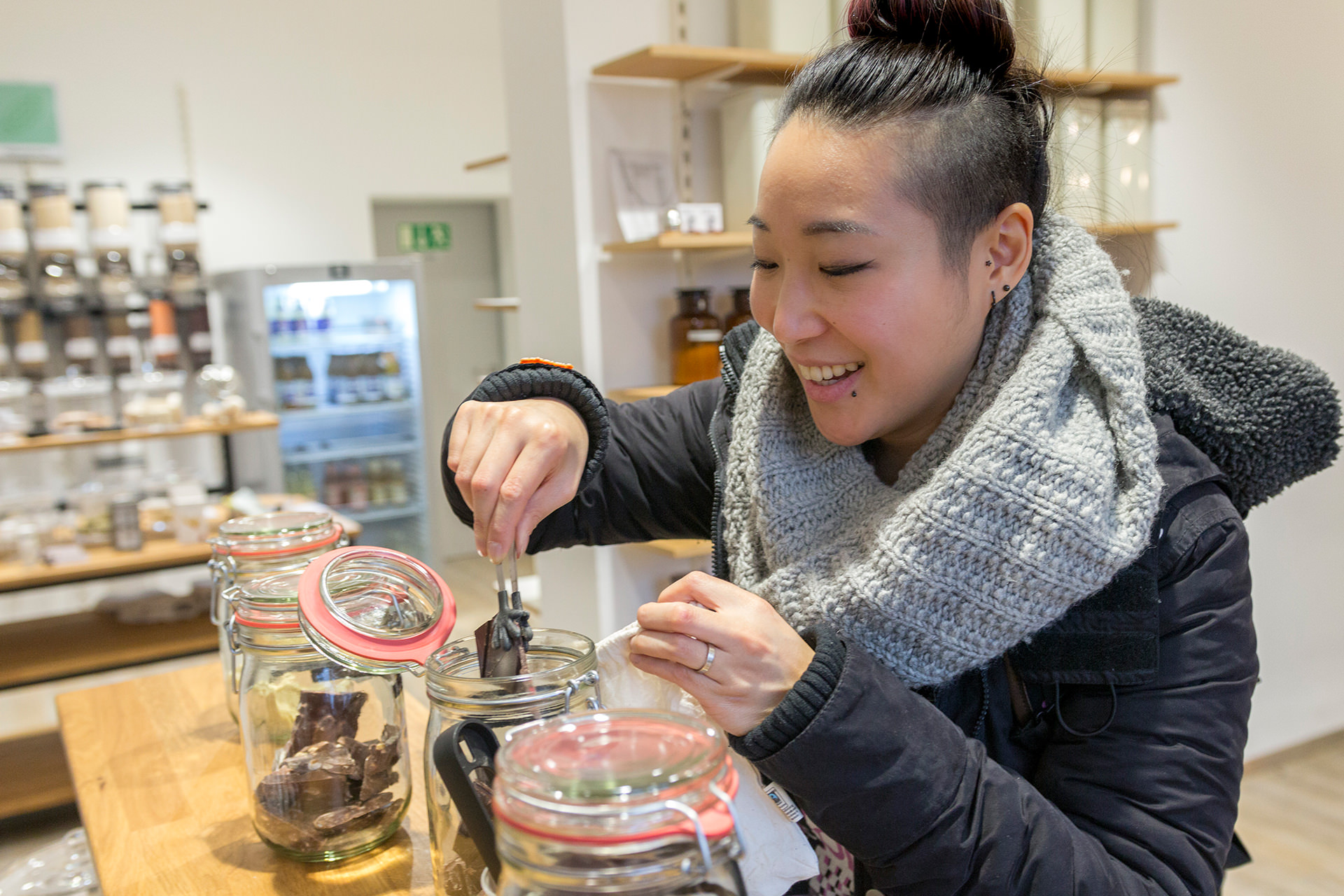
In the beginning, nobody, including us, even realised the impact. And who is seriously in favour of more waste? After a while, some family members and friends liked it, but made it very clear that we shouldn't expect them to do that, which wasn't the case anyway. In the meantime, after several years, a lot of things have rubbed off, from family members who only get bread from the bakery in cloth bags or go to restaurants armed with Tupperware to a friend who is making it a challenge to organise her next barbecue party as waste-free as possible. Even my hairdresser proudly told me that he only buys yoghurt and milk in a returnable jar!
What are your top 5 tips to make it easier to start living a waste-free life?
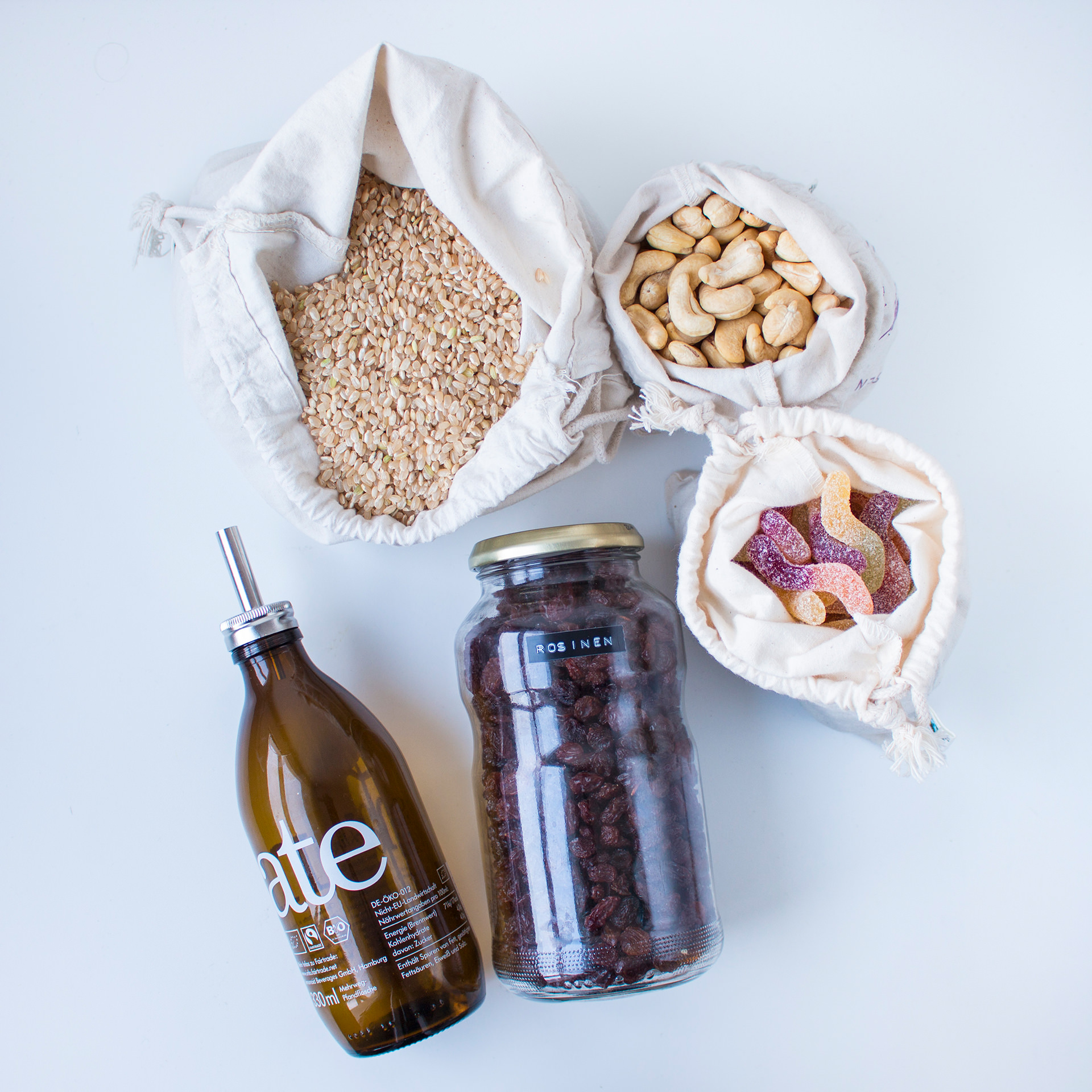
(1) Insert the jute bag. If you often forget to do this, you can put it under the key or get a bag that you can clip to your key ring.
(2) Go for unpackaged fruit and vegetables, put them loose on the conveyor belt or use laundry nets for other purposes.
(3) Choose glass and paper packaging over disposable plastic.
(4) Reusable instead of disposable: dishcloths instead of washing-up sponges, cloths instead of kitchen roll, washable cloth pads instead of disposable cotton pads.
(5) Ask yourself: Do I really need this? First of all, you can put it aside and if you still want it after seven days, you can always buy it. In fact, you forget most of it after just a few hours.
By the way, we also provide more tips on how to start living a more waste-free life in our blog post Don't throw it in the bin - living without rubbish.
The questions were asked by Julia Hupel.
<div class="copyrights">photo in header © wastelandrebel.com</div>