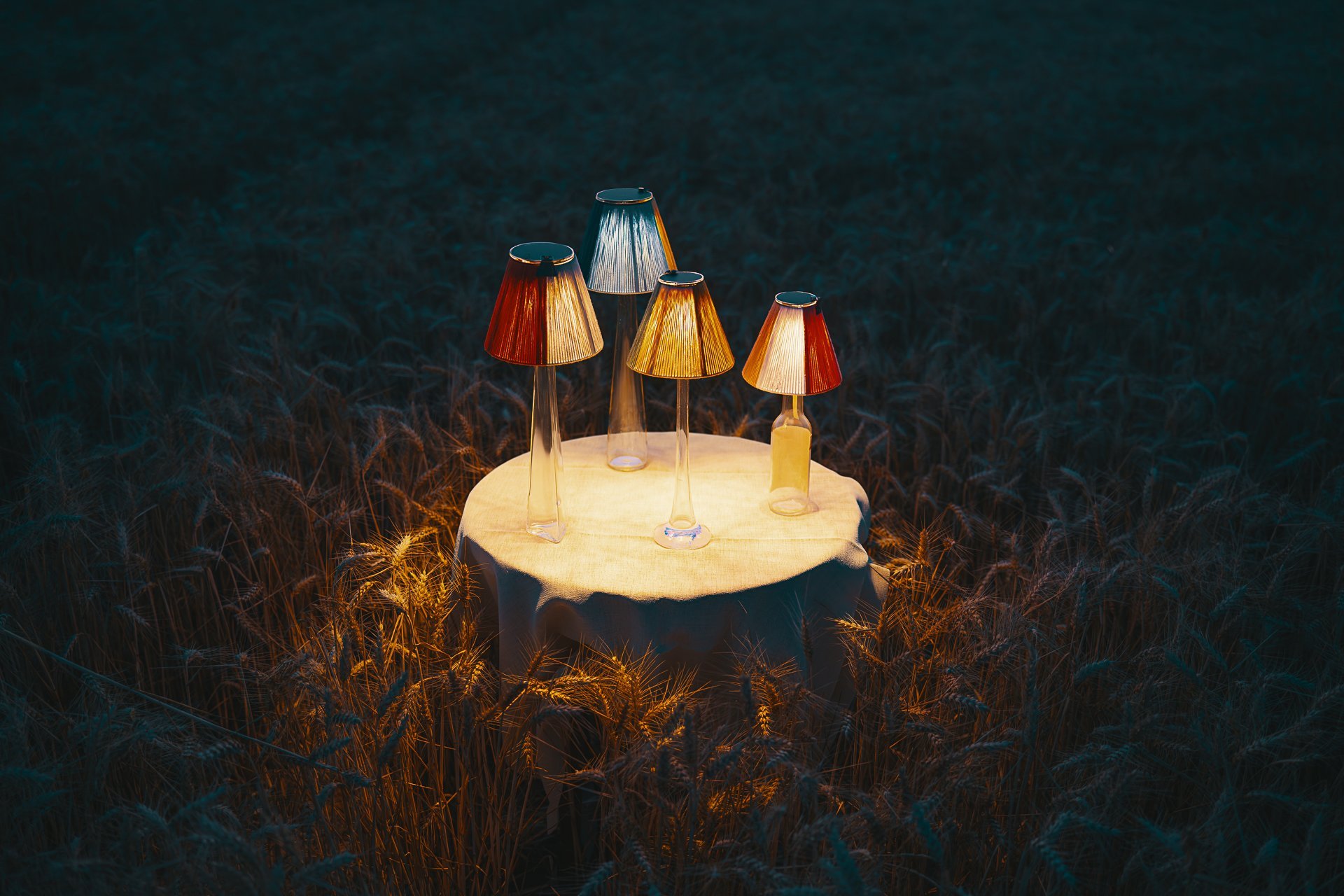
In the garden, weatherproofing comes first. A lantern that is going to
live outside needs an IP65 housing — dust-tight and protected against
water jets. Showers, sprinklers and morning dew then count as routine,
and the lantern can hold its spot all summer instead of commuting
indoors every night.
Second, the charging spot. A solar lantern charges best where your
garden is brightest: a few hours of direct sun a day. As a rule of
thumb, one hour of summer sun stores about one hour of light. In
half-shade under trees it still charges, just more slowly. If the sun
wanders across your garden over the day, let the lantern wander too —
charged at the sunny end of the bed at noon, on the table by night.
For grey weeks, a good module like the SOMO also charges via USB-C.
Third, winter. Low winter sun charges noticeably more slowly, and the
dusk sensor switches on early. You can keep the lantern working
outside — or move it to the windowsill, where it gathers light by day
and takes over the dinner table at night. With USB-C it stays bright
even in December.
Finally, count in garden years, not seasons. With glued-shut solar
lights, the battery's end is the lamp's end. The SOMO lifts out and
can be replaced on its own — the jar stays what it is, and the garden
keeps its light.