Journal ·
Don't put it in the bin - life without waste
Plastic not only has an impact on our health, but is also bad for the environment. Scientists estimate that by 2050 there could be three times more plastic waste in the oceans than fish. But what if we simply stopped…
Plastic not only has an impact on our health, but is also bad for the environment. Scientists estimate that by 2050 there could be three times more plastic waste in the oceans than fish. But what if we simply stopped producing rubbish?
Every German throws an average of 37 kilos of plastic waste in the bin. In fact, there is hardly any area of our lives that is free of plastic. Our food is wrapped in it, our clothes are often made of it and we often find it in the form of microplastics in our care products. Plastic is harmful in many ways. The finite resource of crude oil and a lot of energy is used in its production. Many of the plastic's components are harmful to health. And recycling and disposal is nowhere near as good as it seems.
Only 40 per cent of plastic waste in the EU is actually recycled, the rest is incinerated or disposed of in landfill sites, or ends up in the environment and the oceans. In some parts of the world, the plastic problem is so bad that only strict measures can help. For example, because the beautiful Lake Atitlán in Guatemala is heavily polluted, the mayor of the lakeside village of San Pedro La Laguna has now banned plastic packaging that ends up in large quantities in Lake Atitlán.
Zero waste: only one glass of rubbish per year
But what if we could drastically reduce our own waste production? This is exactly what the zero-waste movement is trying to do. Pioneer Bea Johnson from the USA is leading the way. She, her husband and their two children only produce enough waste per year to fit in a jar. And she is no longer alone. Followers of the zero-waste movement around the world are trying to produce as little waste as possible. But how do you go about it? Bea Johnson follows the principle of the five "Rs": Refuse, Reduce, ReUse, Recycle and Rot. Avoid, reduce, reuse, recycle and compost. Living according to the five "R "s requires some thought and a little time at the beginning. But anyone can learn it. The well-known pop musician Jack Johnson even wrote his ownsong for children to get them interested in the topic of waste separation and waste avoidance.
So what do I really need? And where can I get these things without plastic or packaging? What can I make myself? Can I borrow things so that I don't have to buy them? Can I have something repaired instead of throwing it in the bin? And what is the best way to compost organic waste?
Living waste-free - where should I start?
But there is hardly anything in the supermarket round the corner that is not packaged. Even apples and bananas have stickers on them and the cucumber is sealed in plastic. Fortunately, the zero-waste community now offers a wealth of information with useful tips and expertise on a waste-free lifestyle. The largest German-language blog is Wasteland Rebel. Here you can learn a lot about the alternatives.
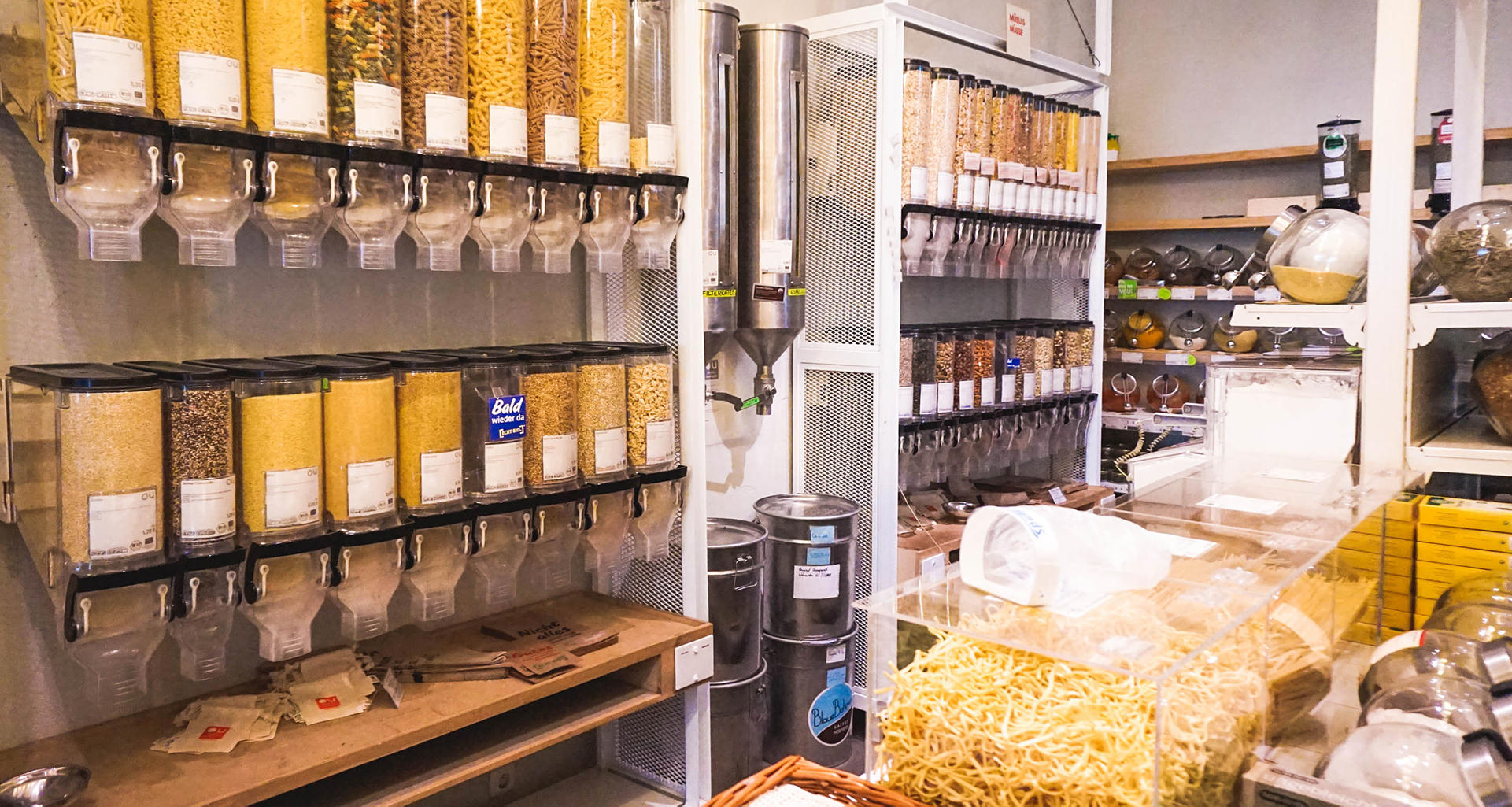
Unpackaged shopsand weekly markets also offer good options. Jute bags and preserving jars are the basic equipment for plastic-free shopping. Many care products and household products are easy to make yourself with just a few ingredients. And clothes can be bought second-hand if necessary. The first conventional supermarkets also seem to have recognised the problem. In the Netherlands, the supermarket chainEkoplaza has been offering 700 plastic-free products in one shop since the beginning of the year and is increasingly focussing on recyclable packaging made from cardboard and glass.
If the zero-waste lifestyle initially seems too time-consuming or too complicated, you can start small. A toothbrush made from bamboo or unpackaged soap instead of shower gel or shampoo can make a big difference. Or avoiding single-use products. Less waste is the motto here, because the end result is less waste and a less polluted environment.
<div class="copyrights">photo in header © Annie Spratt</div>
Autorin: Nina Ryschawy