Solar lantern for the garden

A garden is where a solar lantern earns its keep: charging and glowing happen a few steps apart. By day it stands in the sun between the vegetable bed and the garden table; by night it returns that light to wherever people eat, talk and play — no extension cord across the lawn, no outdoor socket, no throwaway batteries. For that to work through many garden years, the lantern has to manage three things: shrug off weather, keep charging on dull days, and switch itself on at dusk. This page covers what makes a solar lantern good in the garden — and where it does its best work.

Use cases

On the garden table

On the garden table

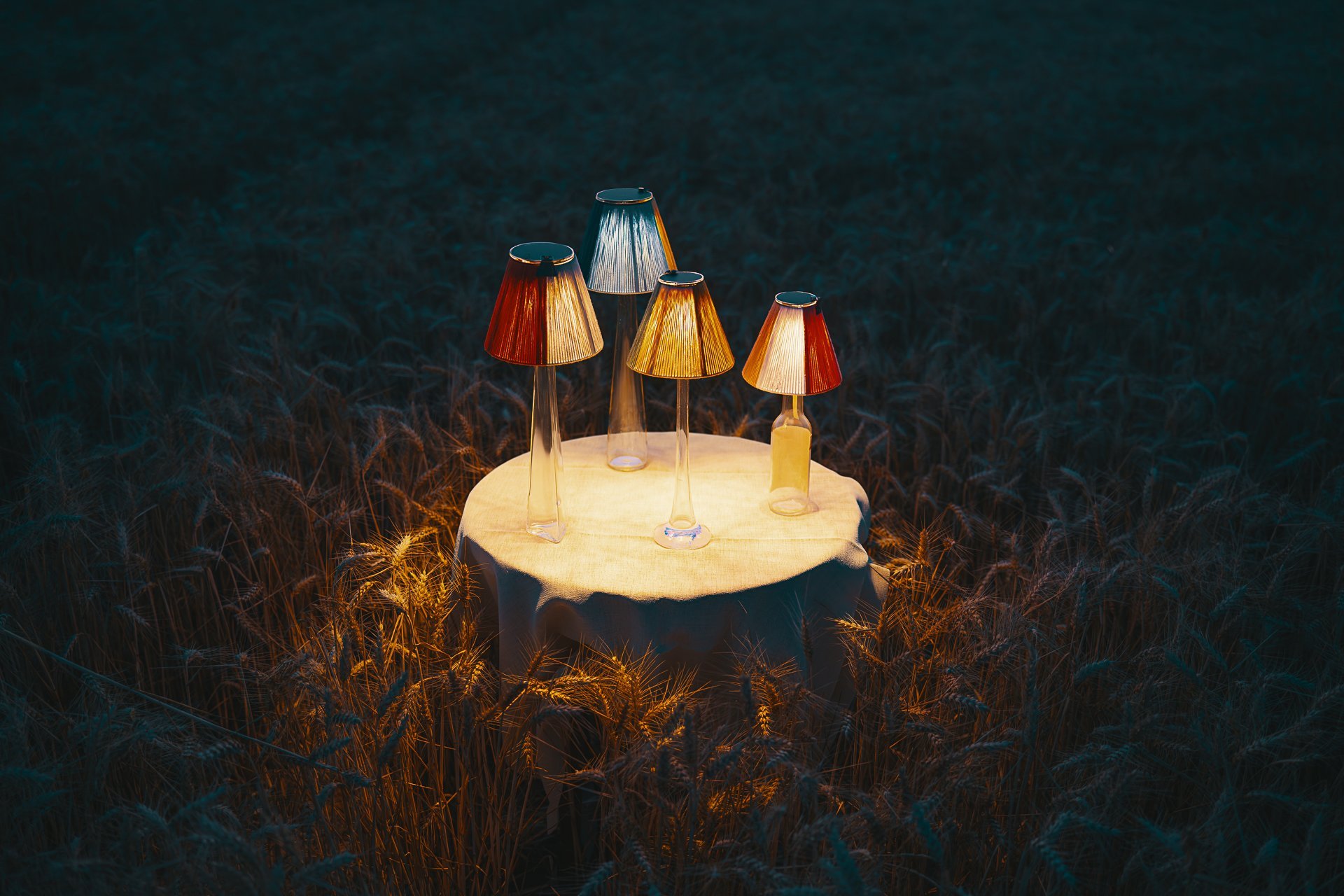
Dinner outside is the moment solar lanterns are built for. On the table, warm and glare-free wins: 3000 kelvin feels like candlelight and is kind to food, faces and long conversations. 100 lumens is plenty for serving and reading aloud; after that you dim down and the evening stretches. The day/night sensor does the housekeeping — the lantern stands in its spot all day, charges in the sun and switches itself on at dusk. Setting the table is still your job.

By the beds and along the path

By the beds and along the path

There is no socket between the raised bed, the water butt and the garden path — which is exactly where a solar lantern belongs. It simply moves with you: down to the herbs for a late harvest, then onto the steps as a marker for the way back. And it may stay out, sprinkler or not. IP65 means dust-tight and protected against water jets, so rain, watering cans and morning dew are a normal garden day for a lantern built like that — not a reason to bring it in.

Long summer evenings

Long summer evenings

When guests stay, the light shouldn't leave first. On its low setting one charge of the SOMO module lasts up to 100 hours — not one evening, half a summer. Put two or three lanterns between the plates, dim them low, and keep the garden dark enough for stars and fireflies. When the party drifts from the table into the grass, the light drifts along — no cable remembers where the evening began.

What to look for

In the garden, weatherproofing comes first. A lantern that is going to live outside needs an IP65 housing — dust-tight and protected against water jets. Showers, sprinklers and morning dew then count as routine, and the lantern can hold its spot all summer instead of commuting indoors every night.

Second, the charging spot. A solar lantern charges best where your garden is brightest: a few hours of direct sun a day. As a rule of thumb, one hour of summer sun stores about one hour of light. In half-shade under trees it still charges, just more slowly. If the sun wanders across your garden over the day, let the lantern wander too — charged at the sunny end of the bed at noon, on the table by night. For grey weeks, a good module like the SOMO also charges via USB-C.

Third, winter. Low winter sun charges noticeably more slowly, and the dusk sensor switches on early. You can keep the lantern working outside — or move it to the windowsill, where it gathers light by day and takes over the dinner table at night. With USB-C it stays bright even in December.

Finally, count in garden years, not seasons. With glued-shut solar lights, the battery's end is the lamp's end. The SOMO lifts out and can be replaced on its own — the jar stays what it is, and the garden keeps its light.
From our workshop

Frequently asked questions

Yes, if it is built for it. The SOMO module is IP65-rated — dust-tight and unbothered by water jets. Rain, sprinklers and dew are part of a normal garden day, not an emergency.

In half-shade yes, just more slowly. It charges fastest in direct sun: as a rule of thumb, one hour of summer sun stores about one hour of light. If your garden sits almost entirely in shade, the SOMO's USB-C port fills the gap.

Yes. The day/night sensor notices dusk and switches the light on, then off again at sunrise. You can simply leave the lantern in the garden — it keeps its own schedule.

Up to 100 hours on the low setting, 28 on medium, 5 at full brightness (100 lumens). Dim it after dinner and one charge covers many evenings.

Keep it glowing. Winter sun charges more slowly, so pick the brightest spot you have — or bring the lantern in to the window and top it up via USB-C when needed. Winter is when warm light is needed most.

Stay in the light

News from our workshop in Johannesburg — a few times a year, honest and short.