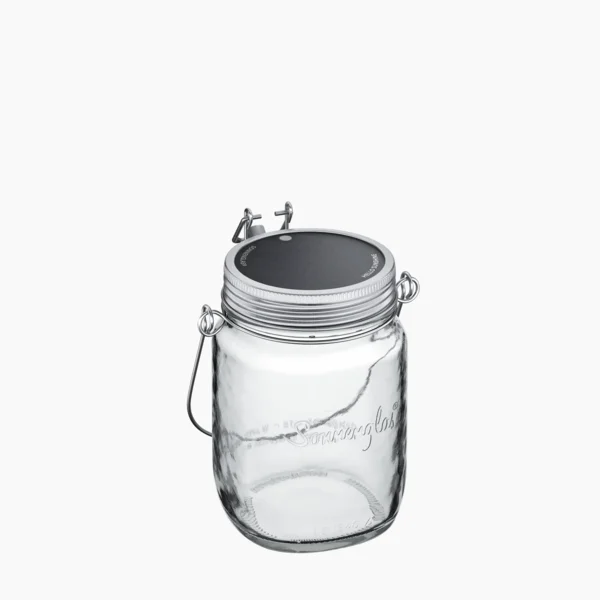
Journal ·
Winter Light
Short days, a low sun — and a jar that keeps glowing. Winter notes on solar light, with greetings from Johannesburg.
When it is winter here in Johannesburg in July, the summer sun is out
over Berlin — and the other way round. A solar light lives with both
halves of the year. So here are a few honest answers for the European
winter.
Yes, the lantern charges in winter. The solar cell works whenever
light reaches it — the low, short winter sun simply delivers much
less of it. Expect noticeably longer charging times than in July, and
give the lantern the brightest spot you have: a south-facing window,
the balcony rail, any patch without shade.
The dusk sensor is on your side in winter. The sky clocks off at four
in the afternoon, so the light starts its shift early — and the long
evenings are exactly when a warm, 3000-kelvin glow matters most. Dim
it down: on the low setting one charge lasts up to 100 hours, and in
winter stamina beats brightness.
And when the sun stays away for weeks? That is what the SOMO module's
USB-C port is for. A few hours on the cable stand in for the missing
sky — no guilt required. The solar principle stays; winter is just
its off-season.
Whether the jar stays outside or moves to the window is up to you —
IP65 keeps dust and water jets out either way. Many people bring
their jar in for the dark months, as a window light against the early
dusk. That is still solar light, just with a shorter commute.
And while your jar glows through December, our colleagues at Victoria
Yards are building the next ones in high summer — in a factory that
runs almost entirely on solar power. Somewhere it is always summer. A
Sonnenglas keeps that in mind.